This lesson's interactive features are locked, please to keep using them
You're on assignment part 2/2 for this lesson.
HTTP CRUD Database Lifecycle
We talked about how a "create" operation flows through a web application. Let's talk about a "read."
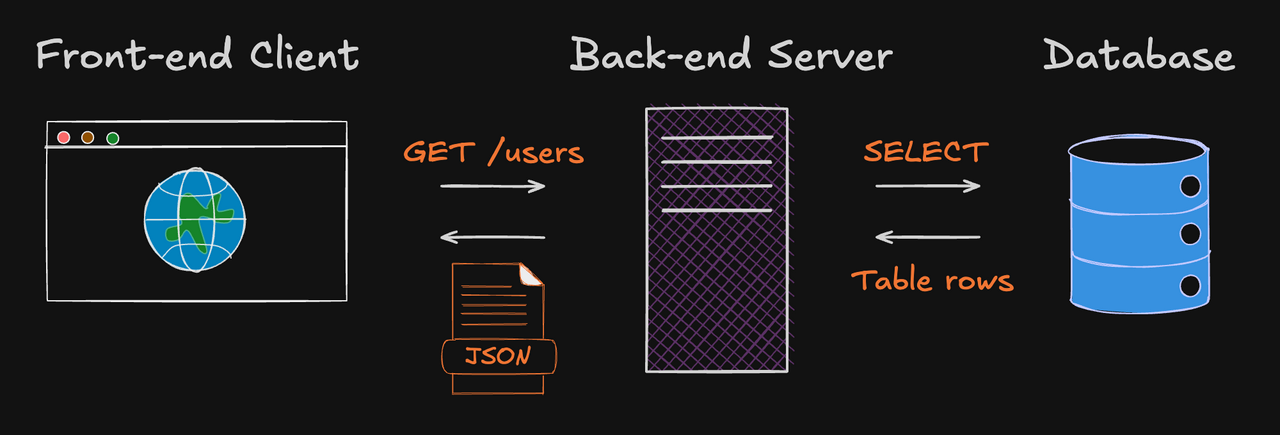
We'll use an example scenario from the CashPal app. Our product manager wants to show profile data on a user's settings page. Here's how we could engineer that feature request:
- First, the front-end webpage loads.
- The front-end sends an HTTP
GETrequest to a/usersendpoint on the back-end server. - The server receives the request.
- The server uses a
SELECTstatement to retrieve the user's record from theuserstable in the database. - The server converts the row of SQL data into a JSON object and sends it back to the front-end.