You're on assignment part 2/2 for this lesson.
Root User
The "root" user is a superuser. It has access to everything on the system and can do anything. When you use the sudo command, you're running as the root user (as long as your system hasn't been configured differently).
The sudo keyword is convenient because it quickly gives you elevated permissions to run a single command.
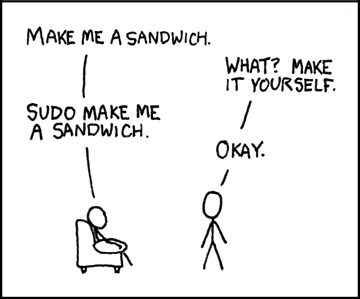
-- xkcd
However, it can also be dangerous because it gives you access to everything. If you run a command with sudo that you don't understand, you could do serious damage to your system.
For example, rm with the r and f flags run on the root directory (/) will delete all the files on your system. Don't do that. The r flag is for "recursive" (delete everything inside) and the f flag is for "force." Most systems will prevent you from doing this, but if you run it with sudo, you've just turned your computer into a very expensive paperweight.
Some modern systems will actually prevent you from deleting everything by default as a safeguard unless you use --no-preserve-root, but it's still a very bad idea.
Should I Use sudo?
Sure, as long as you understand what the command you're running does. Just be careful.